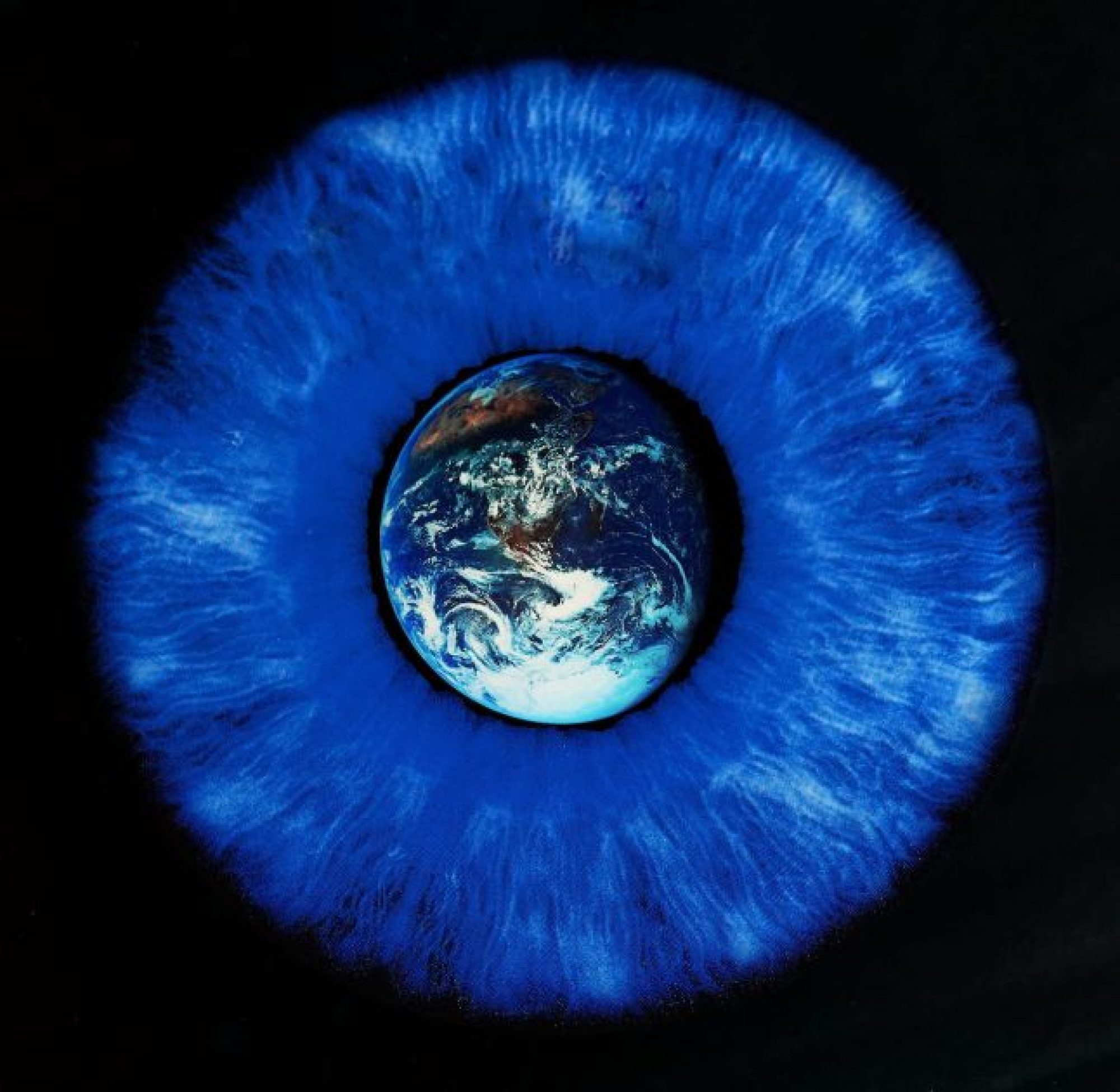
We have been compelled to develop a no-touch society during the CVD-19 pandemic, without being aware, or preparing well for the consequences. Social Isolation, home working, restricted movement and travel, will all have residual effects on society world-wide. Those waiting to see what’s going to happen post CVD-19, are already behind the curve.
Reaching out (metaphorically and physically) has never been more problematic; we simply can’t afford to reach out and touch another human being, for fear of spreading the virus. The disruption caused by the social distancing needed to prevent this pandemic is changing everything we do and many of these changes will stick. How we eat, work, shop, socialise, exercise and manage our daily lives has changed and to many, the new world order is a change for the better.
I was moving towards home working in 1997 when I first recall seeking that privilege from employers ill-equipped at the time, to grant my request. The internet existed then more as a research tool for academics and research institutions. My dream was to spend more time at home with my family whilst being confident that I could juggle my work/life balance and be productive in both. I was premature. Not only could my employers not see the benefits, I hadn’t taken into consideration the amount of motivation required to make each aspect of my life functional and productive, whilst home working or home schooling, nor did I consider the myriad of distractions to help me avoid doing the most important things first. Instead of playing frisbee with the dog, watching just one episode of some daytime TV programme or browsing the net because a “what I’d really like to be doing” thought popped into my head, I needed to understand how I should be organising time.
Repetition, repetition, repetition; are supposedly the only three things required to acquire a competant skill, plus 10,000 hours of deliberate practice amounting to dedicating approximately 7 years of your life, four hours a day to something, to become a Master – if you subscribe to Malcolm Gladwells 2008 pop psych theory. However, various studies (and Mr Gladwell himself) now debunk his theory, espousing that practice is not a sufficient condition in itself but that motivation and of course a degree of passion and skill in the chosen field are required.
This change will manifest in many ways, both positive and negative. The isolation will create greater distancing from work colleagues which could lead to reduced stimulation leading to anxiety and depression. Society needs to recognise this and provide services to counter the spread of mental disorder. Its quite clear that the on line consumer society has also contributed to isolation and the spread of anxiety and therefore society collectively and on-line communities are responsible for providing the antidote but not by promoting the proliferance of drug remedies. The theory being born out of the response to CVD-19 is based on talking as opposed to meeting. Stephen Hawkin once wrote: “For millions of years, mankind lived just like the animals. Then something happened which unleashed the power of our imagination. We learned to talk and we learned to listen. Speech has allowed the communication of ideas, enabling human beings to work together to build the impossible. Mankind’s greatest achievements have come about by talking, and its greatest failures by not talking. It doesn’t have to be like this. Our greatest hopes could become reality in the future. With the technology at our disposal, the possibilities are unbounded. All we need to do is make sure we keep talking.” Just look at what can achieved when on a world wide basis, we attack the greatest threat to world health through communication. Apply the same rigour to tackling anxiety and depression and we could begin to build a better more positive outlook.
When it comes to staying at home, the first challenge is not the time you are imprisoned, its the development of passion and motivation derived from spending time with loved ones, children, parents and friends (in houses of shared occupancy) that should be cultivated, not just the dedication to the number of hours spent on acquiring or developing a new skill but developing these relationships first, to discover what really floats your boat. Gradual shifts in home working have been happening over time but this enforced episode of home staying, will undoubtedly, unpreparedly, accelerate more immediate behavioural change.
Isolation may become our new normal with the optimisation of working at home, better solutions to communications challenges and better use of technology beyond typical office environments driving the change. Our identity is fast becoming more than just our job and we can now enjoy the multiple sources of stimulation that are the result of staying at home with loved ones rather than spending 1/3rd of our day with relative strangers at the office.
Convenience
Everything will be ordered on the net and will be delivered, whether by motorbike, white van or drone. Alternatively; is it time to localise again and reinstate local services such as the butcher the baker and ………..? Doorstep milk delivery is already making a resurgence. Is this the time to deconstruct the supermarket giants and return to a simpler local model of food procurement? The farmers around me (outnumbered now by the non-farmers) would certainly welcome the opportunity of selling locally grown produce to local communities instead of suffering the tactics of multi national supermarket buyers, driving prices down to uneconomic levels, forcing them out of business (thus the proliferance of non-farmers). Knowing where your food is coming from is becoming increasingly important and sourcing locally, drives down individual carbon foot-prints.
Just take a look at the reports of natures recovery. Taken with a pinch of salt at present, it seems our environment adapts as we do, something scientists have been ramming down our throats for decades, a message we have resolutely ignored – till now maybe? Our personal evolution (revolution) appears to make a real difference and when it is for the better, nature responds.
Inconvenience
Humans take time to change so we have to expect rising tensions and conflicts between opposing factions. Today in America, there are protests against lockdown in several states and civil unrest will lead to new laws and the legal systems in our countries will be beleaguered with claim and counter claim relating to civil liberties and legal breaches, relating to contracts or regulations as a result of ‘Force Majeur’. If you check your health, home or business insurance policy, CVD-19 may not exist as a notifiable disease and how many Insurance businesses might try to wriggle out of their obligations to you, to cover such things as loss of earnings, business continuity or added complications to existing illness due to this pandemic?
Our conventions and belief structures have been around for eons and will be slow to adapt. Our churches, mosques, synagogues, temples and sanctuaries, now all closed, might become less significant to congregations of all denominations. Congregation has been banned for several months and its possible that collective worship will be replaced in favour of technological solutions to celebrate individual beliefs with others of similar faith? Any attempt to homogenise beliefs will always present opportunities for conflict but if the evidence of the coming together of communities, belief structures, creeds and colours during CVD-19 is anything to go by, radicalism will decrease and social and cultural integration will improve.
There are many other threats that must be considered. The older generation are less inclined to isolated living (although this is a sweeping generalisation) and more reliant on collective support structures. They are deemed to be less proficient with technology but there is evidence that they can grasp video conferencing fairly quickly and have adapted really well so far.
Prove you are Immune
One big threat (or opportunity) I perceive, is that there will be value in being able to provide formal proof of immunity from spreadable disease in the future and the test, track and trace policy might then extend to all maladies. It may also be the case that some organisations might become selective about who they might interact with in the future. This is a bit George Orwell I know but social consciousness and awareness is heightened now and responses might become radical. In the present and in the future, primary prevention will be an essential component of avoiding a “V” bounce back after initial peaks are being reached worldwide in any pandemic and lets be clear, there will be more. Being able to provide certified immunity might become a ‘thing’ in the future?
I can’t image it – but will people stop going to events, football (soccer) matches, concerts, theatre, festivals etc? Will the hospitality industry respond by providing solo dining venues, robotic service? Will events providers move to VR experiences, immersive technology and other solo experiences where you feel part of the crowd? I already know that listening to music in 8G is a different experience than listening in mono or stereo and that the technology in headphones nowadays improves the quality of the listening experience.
I Recently stopped going to live events because they are actually more enjoyable from the comfort of my arm chair. Sport in particular is enhanced by slow motion replays, detailed investigations through multiple camera angles, debate between officials and pundits etc. The atmosphere is what is missing, the collective ooh’s and aah’s of the crowd, the applause, the energy, the feeling of being part of the game and involved with your icons – how can that be replaced? Certainly not by technology as the farce that is “crowd Noise” as the Premier League in England restarts without crowds has proven.
What if you can’t attend an event unless you can prove your health? What if you haven’t got a certificate of immunity to travel on public transport, planes, boats or trains? Will your passport require to contain readable technology that is updated on-line everytime you travel? Will on-line health assessments to update your personal details determine whether you can move around the world freely in the future? Will vaccination (when it is developed) be mandatory?
My wife and I (elderly citizens) believe we suffered a CVD-19 type of illness at Christmas this year. It was horrible and something I would never like to go through again but thats not the point. We may be immune! Thinking this, we tried to get tested so that we could volunteer in the health service of our local community. We wanted to be able to help by caring, moving trolleys, cleaning or providing relief for overworked staff in any capacity. No such test is available and therefore we are frustrated and the local hospital staff remain overworked, stressed and tired, not the ideal psychological profile for caring professionals. Now, we understand that immunity can be reversed and that some people who have suffered and have been treated for CVD-19, have been reinfected after the first treatment was administered. Is the virus mutating so quickly?
Employment
We are now facing unprecedented levels of local unemployment. This will have a negative impact on global economies. Many will be forced to reconsider their career path and opportunities in business sectors will diminish. Simply switching jobs to a competitor will be a thing of the past, as entire sectors will be downsizing or becoming insolvent as demand for these services decreases.
We might all have to upskill, re-skill or retrain and diversify into smaller working portfolios of entrepreneurial style personal business, to recover our income expectations. Alternatively, we might settle for less and live more simply. Lets face it, personal expenditure is already less during the lockdown….. Will the economy ever catch up with these changes?
Companies will reduce their commitment to property leases. The vacation of glass clad office buildings in every city centre in the developed world, will signal the start of a global recession or perhaps a global depression. Property developers will cling tightly to their assets but the banks may have different policies going forwards and empty city centre buildings may become more prevalent.
Perhaps we could fill empty office buildings with homeless people, or convert them to Nightingale hospitals. Homelessness needs to be a thing of the past and we are certainly going to need more hospital capacity should viral pandemics be here to stay!
Global Refocus will draw further commentary from contributors at http://www.globalrefocus.com. Please note the web address and join us for continued observation of our changing world.


